AO26 Final Eight: Separating the Contenders from the Pretenders
Crunch time has arrived in Melbourne, and AO26 has delivered exactly what the seedings promised.
The top six seeds are all safely through to the quarter‑finals, barely breaking sweat. Aryna Sabalenka, Iga Swiatek, Coco Gauff, Amanda Anisimova, Elena Rybakina, and Jessica Pegula have cruised through four rounds, four of them without dropping a set. Even where sets were lost — notably by Swiatek and Gauff — the final sets were one‑way traffic.
They’re joined by two in‑form outliers. Elina Svitolina, now a 14‑time Grand Slam quarter‑finalist, and the rising force of Iva Jovic, seeded 29, who has turned promise into performance on the biggest stage.
So who actually wins from here?
The Seeds Have Separated
AO26 has reinforced a trend that’s been building for over a year: the elite are pulling away from the pack.
The common traits are clear. Bigger power. Commitment to aggression. Willingness to accept unforced errors as the price of dominance. And, increasingly, a second serve that doesn’t sit up and beg — sometimes clocking faster than opponents expect.
Jovic might seem the odd one out, but she actually proves the point. Her game today looks nothing like it did five months ago. Her serve has been 15–20 mph faster at times, averaging more than 10 mph quicker across matches. Her groundstrokes have added real weight, allowing her to dominate Jasmine Paolini in round three — a player who beat her comfortably in the US last summer.
Jovic is learning fast. And she’s learning from the very best.
Reality Check: Experience Still Matters
That said, winning a Grand Slam at crunch time is different.
Jovic and Svitolina deserve huge credit, but neither has reached a Slam final before. That matters. The ability to handle nerves, momentum swings, and pressure points in week two separates contenders from champions.
Put an asterisk next to both names. DTM doesn’t expect that to change this week.
That leaves six realistic winners. But not all six are playing at the same level.
Serving: The Clearest Divider
At the sharp end of Slams, serve quality decides everything.
First‑serve percentage matters. But second‑serve points won matter even more. Free points given away under pressure are fatal.
Across four rounds at AO26, Aryna Sabalenka’s serving numbers stand out immediately. Her first‑serve percentage has stayed between 68–73%, and she’s still winning a majority of points on her second serve. That combination starves opponents of opportunities.
Compare that with Swiatek and Gauff. Both have served poorly at times, and both have paid for it by losing middle sets — not once, but repeatedly. When pressure rises, stats usually worsen, not improve.
Based on serve alone, the most likely finalists are Sabalenka vs Rybakina or Anisimova. Everyone else needs help.
Returning Under Fire
Breaking serve against elite servers is brutal. And against Sabalenka, taking matches to tie‑breaks is a losing strategy.
The best players win more points than they lose when they get the return in play — but against top servers, that margin shrinks fast. Swiatek and Gauff are especially vulnerable because they lose their own serve more often, forcing them to return well just to stay alive.
We’ve already seen it at AO26. Swiatek lost her serve three games in a row against Kalinskaya. Gauff struggled badly against Muchova and Baptiste. Against the very best, those lapses don’t just hurt — they end matches.
Winners vs Unforced Errors: The Hidden Truth
Modern tennis does not reward patience alone.
You cannot wait for mistakes. You must create pressure — and sustain it.
The winners‑to‑unforced‑errors ratio tells the story. Maintaining a positive balance across an entire match is incredibly difficult. Sabalenka does it better than anyone. That’s why she’s world No.1.
A single moment illustrates the point. Against Svitolina, Andreeva played ten flawless points to start the second set and led 2‑0. One routine missed forehand pass later, the momentum vanished — and never returned. Belief at this level is fragile. Lose it once, and the match can be gone within minutes.
Winning Slams is about owning the big points. Sabalenka’s greatest strength is recognising them — and taking them.
So… Who Wins AO26?
It would take a genuine shock for Sabalenka not to reach the final.
Jovic and Svitolina are unlikely to win two more matches to reach their first Slam final. Gauff simply isn’t playing well enough right now — she looks relieved to survive rather than confident to dominate. She would need multiple opponents to have off days.
In the bottom half, the likely semi‑final is Anisimova vs Rybakina. Both have the weapons. Both carry risk. Anisimova’s margin is razor‑thin, and Jessica Pegula is a brutal quarter‑final draw — far tougher than Wang, who already pushed her.
DTM slightly favours Rybakina, with Pegula a serious dark horse. Swiatek could surprise, but her current vulnerability on serve makes a deep run difficult unless opponents falter repeatedly.
Final Word
Sabalenka will start as favourite. She’ll also be hoping she doesn’t see Rybakina or Pegula across the net.
Madison Keys showed last year that Sabalenka can be beaten — but it takes a fearless, high‑level performance over three sets.
DTM is backing the outsiders. Elena or Jessica would be a great story.
One thing is certain:
The winner’s surname will end in “a”
Enjoy crunch time.
It’s going to be fun.

Dan has followed professional tennis for many years with a particular focus on performance trends, match dynamics, and statistical analysis. He competed at national level as a junior, an experience that continues to inform his understanding of technique, tactics, and the physical and mental demands of elite competition. He has a particular interest in how player psychology influences decision‑making, momentum, and match outcomes.
He has attended numerous national and international tournaments alongside Katie, prioritising early‑round and outside‑court matches where emerging players and tactical developments are most visible. This on‑site exposure informs his analytical approach, grounding data‑led insights in live match observation rather than abstraction.
As a co‑founder of ChalkdustMedia, Dan is responsible for the platform’s analytical and statistical coverage, entirely focused on the WTA. His work focuses on translating complex performance data into clear, accessible insight, while also considering the psychological factors that shape form, resilience, and competitive consistency.
Dan’s approach combines consistency, objectivity, and a long‑term view of the sport, supporting ChalkdustMedia’s goal of delivering informed, independent tennis coverage under a single editorial banner.
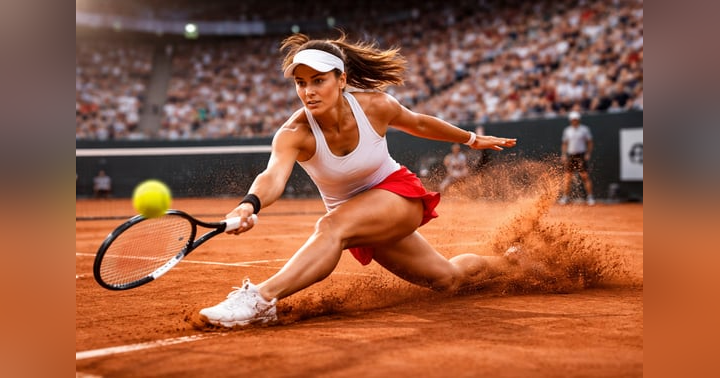
How tennis players adapt to clay courts during the European swing