How tennis players adapt to clay courts during the European swing
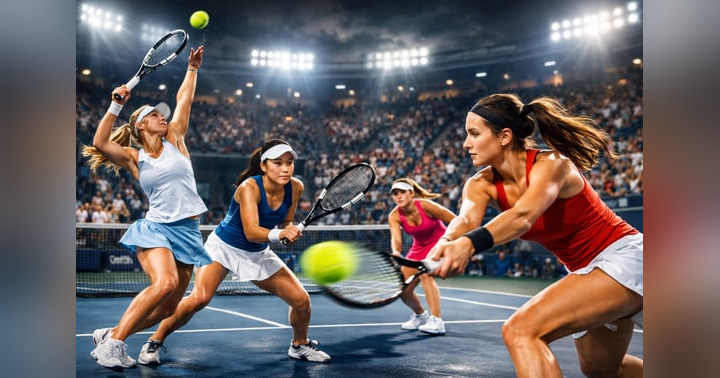
The clay court transition is one of the most demanding phases in professional tennis. This clay court transition requires players to adapt their movement, strategy, and mindset to succeed on red clay. From improved sliding to heavier topspin, mastering clay court tennis tips is essential during the European clay swing.
The clay season begins on April 6th and runs through to the French Open in early June. For players like Alex Eala and Janice Tjen, this period presents a completely different challenge compared to hard courts earlier in the season.
Understanding Red Clay Courts
Red clay courts are made from crushed brick layered over limestone, creating a slower surface with a higher bounce. This dramatically changes rally dynamics compared to hard or grass courts.
The surface requires constant maintenance, including watering and brushing. Unique to clay, ball marks are visible, often requiring umpires to inspect them. Players must also deal with unpredictable bounces, especially when the ball clips the lines.
Key Technical and Physical Adjustments
- Mastering sliding to improve movement and recovery
- Developing enhanced footwork and balance
- Building stamina for longer rallies and matches
- Using topspin to create higher bouncing shots
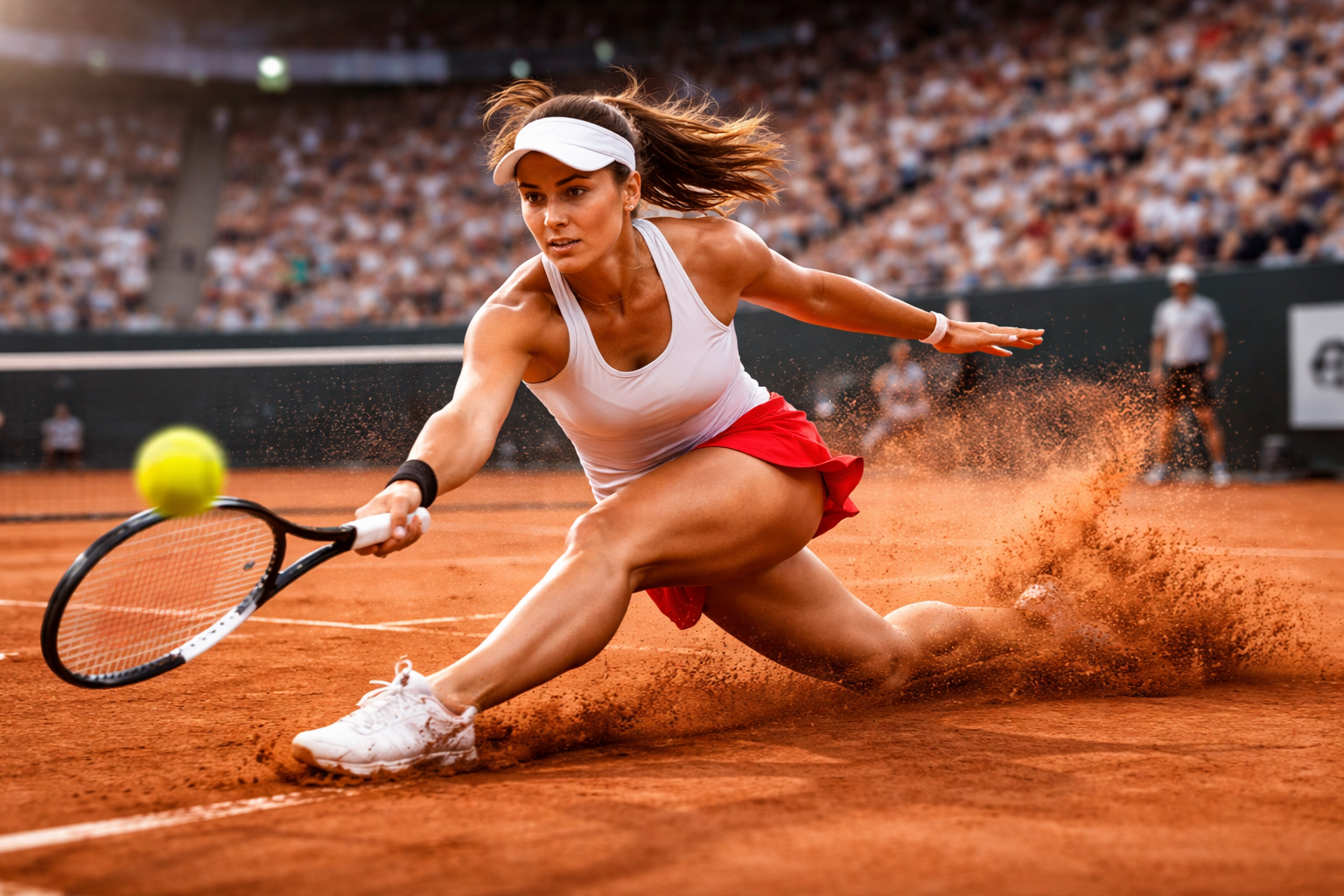
Movement is critical on clay. Players must learn to slide effectively into shots while maintaining control and balance.
Mental and Tactical Changes
- Greater patience in constructing points
- Strategic use of angles and shot variation
- Improved defensive skills
- Acceptance of longer, more physical rallies
Success on clay often depends more on strategy and endurance than raw power.
Experience Matters on Clay
Players raised on clay courts, particularly in Europe and South America, often have a natural advantage. Their familiarity with sliding and point construction gives them an edge.
Camila Osorio is a strong example, with significantly better results on clay than other surfaces. Meanwhile, players like Alex Eala, despite training opportunities, have less match experience on clay, impacting performance.
Comparing players highlights this gap:
- Alex Eala: 13 matches, 38% win rate on clay (last 3 seasons)
- Tereza Valentova: 41 matches, 80% win rate on clay
The Importance of Surface Versatility
While many tournaments are played on hard courts, achieving greatness in tennis requires success on all surfaces. Winning the French Open is essential for completing a Grand Slam.
Only a few players in recent history, such as Serena Williams and Maria Sharapova, have achieved this milestone in the modern era.
How Clay Changes the Game
The slower surface reduces the effectiveness of powerful serves, allowing players with strong defensive skills to compete more effectively.
- Kick serves become more effective due to higher bounce
- Returns are often played above shoulder height
- Drop shots are used more frequently
- Baseline positioning becomes deeper
Key Clay Court Events
- Madrid Open (April 21 – May 3)
- Rome WTA 1000 (May 5 – May 17)
- French Open (May 24 – June 7)
Top players typically compete in these major events, often preceded by a warm-up tournament to adjust to conditions.
Even top-ranked players can struggle on clay. Aryna Sabalenka’s mixed results last season highlight how unpredictable the surface can be.
Final Thoughts
The clay court transition remains one of the most unique and challenging aspects of professional tennis. Players must combine technical skill, physical endurance, and mental strength to succeed.
Matches on clay offer a completely different style of tennis—longer rallies, tactical battles, and physical endurance. It is a true test of a player’s all-around ability and adaptability.

Dan has followed professional tennis for many years with a particular focus on performance trends, match dynamics, and statistical analysis. He competed at national level as a junior, an experience that continues to inform his understanding of technique, tactics, and the physical and mental demands of elite competition. He has a particular interest in how player psychology influences decision‑making, momentum, and match outcomes.
He has attended numerous national and international tournaments alongside Katie, prioritising early‑round and outside‑court matches where emerging players and tactical developments are most visible. This on‑site exposure informs his analytical approach, grounding data‑led insights in live match observation rather than abstraction.
As a co‑founder of ChalkdustMedia, Dan is responsible for the platform’s analytical and statistical coverage, entirely focused on the WTA. His work focuses on translating complex performance data into clear, accessible insight, while also considering the psychological factors that shape form, resilience, and competitive consistency.
Dan’s approach combines consistency, objectivity, and a long‑term view of the sport, supporting ChalkdustMedia’s goal of delivering informed, independent tennis coverage under a single editorial banner.

WTA vs ATP Structural Differences in Professional Tennis Governance