Meet Alexandra Eala: The Philippines’ Tennis Star Leading the Next Generation
The next generation of women’s tennis is no longer knocking on the door — they are already stepping inside. With the power and presence of Aryna Sabalenka and Elena Rybakina setting the benchmark at the Australian Open, attention is now turning to who comes next and who is truly built to challenge the established elite.
Between now and the French Open, Chalkdust Tennis will spotlight five players under 21 who began the 2026 season firmly on the rise. These are not prospects for the distant future. These are players who are already reshaping the tour.
First up: Alexandra Eala.
The Next Generation Are Coming: Alexandra Eala
4 February 2026 | Tennis
Alexandra Eala is 20 years old, from the Philippines, and already carries the weight — and pride — of a nation on her shoulders. After an eye-catching 2025 season, she enters 2026 ranked at a career-high World No. 43, widely regarded as one of the most exciting young players on the WTA Tour.
Her breakthrough moment came at the Miami WTA 1000 in March 2025, where she reached the semifinals after defeating Jelena Ostapenko, Madison Keys, and Iga Świątek. That run announced her arrival. Followed by a final in Eastbourne and a title in Guadalajara, Eala finished the year comfortably inside the world’s top 50.
But rankings only tell part of the story.
More Than a Tennis Player
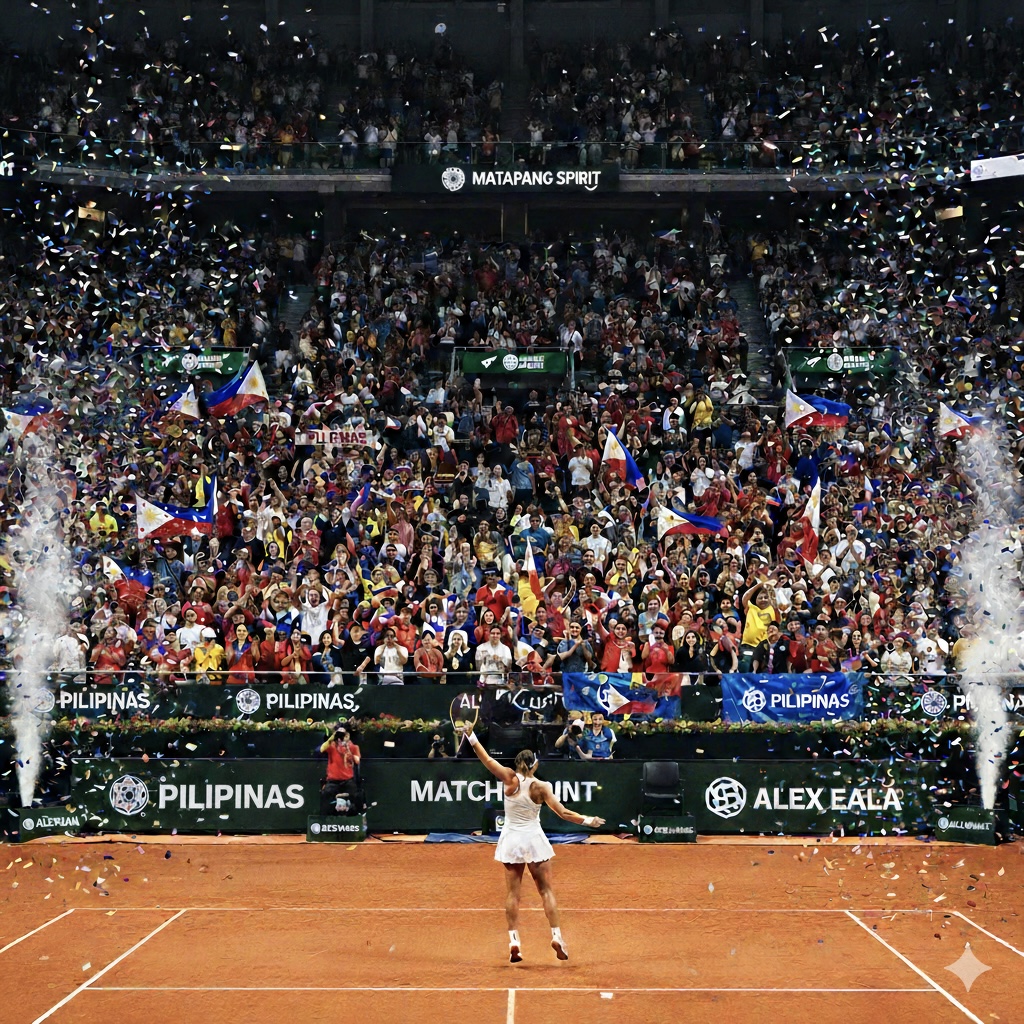
Alexandra Eala is the highest-ranked Filipino tennis player in history, and her impact goes far beyond the court. In the Philippines, she is a cultural icon. Her matches draw huge digital audiences, and her press conferences regularly outlast those of Grand Slam champions — a reflection of what she represents.
Her Matapang spirit has defined her journey from the start. At just 14, she left home to train at the Rafa Nadal Academy in Spain, committing fully to the pursuit of excellence. That courage and resilience continue to define her competitive identity.
One moment that encapsulated her mindset came at the 2025 US Open, where she recovered from 5–1 down in the final set to defeat Clara Tauson 7–6. Matches against Eala are rarely straightforward. Win or lose, she competes until the final point.
She is also known for her generosity toward fans, often staying long after matches to sign autographs regardless of the result — a small detail that speaks volumes.
Strengths That Translate to Wins
Statistically, Eala already ranks among the tour’s elite in several critical areas.
Her standout strength is her Return In Play percentage (RIP%). Over the past 52 weeks, she has put 72.9% of returns back into play, placing her inside the top 30 globally. More impressively, she wins 56.7% of those return points (RIPW%), a figure comparable with top-10 players.
For context, Amanda Anisimova leads at 59.2%, Iga Świątek sits at 58.1%, and Aryna Sabalenka is at 57.3%. Eala belongs in that conversation.
Her groundstrokes are fearless and aggressive on both wings, but it is her backhand that truly separates her. According to Tennis Abstract, her backhand potency ranks third on the entire WTA Tour, ahead of players such as Amanda Anisimova. It consistently breaks down opponents and forces errors under pressure.
Mental Strength and Match Toughness
Some players are difficult to beat not because they always win, but because they refuse to go away. Eala fits firmly into that category.
In deciding third sets during the 2025 season, she won exactly 50% of them — a strong indicator of competitiveness and emotional control for a player still learning the tour. When matches become physical and tense, she continues to battle, regardless of the scoreline.
This grit makes her an exhausting opponent and a dangerous one.
Variety That Hurts Opponents
Eala is predominantly a baseline attacker, coming to the net only 7% of the time. Yet when she does, she wins 66.9% of those points — an efficiency that suggests untapped tactical potential.
One of her most effective weapons is her dropshot. Based on the past 52 weeks of data, her dropshot results in a winner or forced error over 42% of the time, placing her inside the top five on tour. It is a devastating contrast to her heavy baseline game and particularly effective on clay courts.
The Missing Piece
For Alexandra Eala to make the final leap — from contender to regular title winner — there is one clear area for improvement: the serve.
She currently lands 65% of first serves, a solid number but one that must rise to compete consistently at the highest level. At 1.75 metres, she is not built to serve like Rybakina or Sabalenka, but comparisons with players of similar stature are instructive.
Jasmine Paolini, an established top-10 player, lands 67.5% of first serves. Incremental improvement here would make a significant difference.
More crucially, Eala currently wins 59.1% of points on her first serve, compared to 75% for Rybakina. That 16% gap is the difference between winning WTA 125 and 250 events and consistently challenging for WTA 500s, 1000s, and Grand Slams.
What Comes Next
Today in Abu Dhabi, Eala faces Aliaksandra Sasnovich for a place in the quarterfinals of a WTA 500 event — a match she should win. Over the next two years, these are the tournaments where she should begin threatening for titles.
She moves exceptionally well, thrives in hot conditions, excels on hard courts, and already owns multiple weapons ranked inside the top 10 statistically. The pathway is clear.
Improve the serve, and the ceiling lifts dramatically.
Alexandra Eala is already watched and supported by thousands of Filipinos around the world. Her rise feels inevitable rather than speculative. With continued development, she has all the tools to become a regular top-10 player — and quite possibly one day, the first Grand Slam champion from the Philippines.
The next generation is not coming.
Alexandra Eala is already here.

Dan has followed professional tennis for many years with a particular focus on performance trends, match dynamics, and statistical analysis. He competed at national level as a junior, an experience that continues to inform his understanding of technique, tactics, and the physical and mental demands of elite competition. He has a particular interest in how player psychology influences decision‑making, momentum, and match outcomes.
He has attended numerous national and international tournaments alongside Katie, prioritising early‑round and outside‑court matches where emerging players and tactical developments are most visible. This on‑site exposure informs his analytical approach, grounding data‑led insights in live match observation rather than abstraction.
As a co‑founder of ChalkdustMedia, Dan is responsible for the platform’s analytical and statistical coverage, entirely focused on the WTA. His work focuses on translating complex performance data into clear, accessible insight, while also considering the psychological factors that shape form, resilience, and competitive consistency.
Dan’s approach combines consistency, objectivity, and a long‑term view of the sport, supporting ChalkdustMedia’s goal of delivering informed, independent tennis coverage under a single editorial banner.
How tennis players adapt to clay courts during the European swing