The 2026 WTA Top Table: Who Actually Belongs After the Australian Open
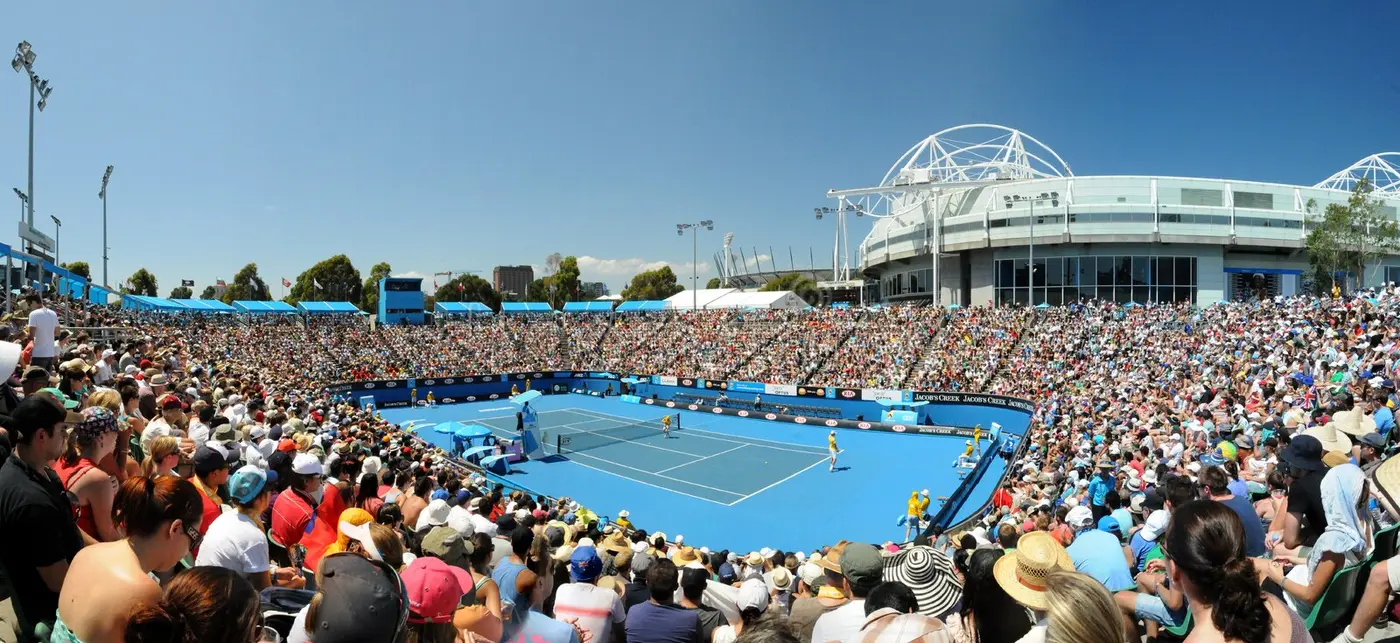
The Australian Open quarter-finals did more than shape a draw — they clarified a hierarchy. Not just who won, but how players won and lost revealed where the women’s game truly stands as we move through 2026.
Rather than relying on reputation or historic success, this analysis focuses on current evidence. Using performance data from the past 12 months, DTM assesses who genuinely deserves a seat at the top table for Grand Slam contention right now.
The Criteria Used to Define the Top Table
The following indicators were used to assess players:
- Serve performance across first and second serve
- Return points won at WTA 1000 and Grand Slam events
- Winners to Unforced Errors ratio
- Wins against top‑8 players in the past six months
- Confidence rating based on recent form
All players are assumed to be fully fit, as competing at this level while carrying a physical issue is no longer viable.
Serve Performance (First and Second Serve Combined)
| Player | Serve Points Won | World Rank |
|---|---|---|
| Elena Rybakina | 74.3% / 50.5% | 1 |
| Aryna Sabalenka | 68.8% / 50.3% | 2 |
| Iva Jovic | 61.1% / 50.3% | 3 |
| Jessica Pegula | 67.4% / 49.6% | 4 |
| Iga Świątek | 69.6% / 48.8% | 9 |
| Amanda Anisimova | 66.3% / 48.4% | 11 |
| Mirra Andreeva | 69.0% / 47.1% | 19 |
| Elina Svitolina | 67.9% / 47.0% | 20 |
| Coco Gauff | 66.9% / 43.3% | 45 |
Return Points Won (WTA 1000 and Grand Slams)
| Player | Return Points Won |
|---|---|
| Coco Gauff | 48.5% |
| Iga Świątek | 47.8% |
| Aryna Sabalenka | 46.3% |
| Mirra Andreeva | 45.7% |
| Elina Svitolina | 45.5% |
| Amanda Anisimova | 45.2% |
| Jessica Pegula | 44.7% |
| Iva Jovic | 43.7% |
| Elena Rybakina | 42.1% |
Winners to Unforced Errors Ratio
| Player | Difference |
|---|---|
| Aryna Sabalenka | +1.8 |
| Elena Rybakina | +0.5 |
| Jessica Pegula | -2.5 |
| Mirra Andreeva | -2.5 |
| Iga Świątek | -2.4 |
| Elina Svitolina | -3.3 |
| Amanda Anisimova | -3.4 |
| Coco Gauff | -8.9 |
| Iva Jovic | -9.1 |
Wins Against Top‑8 Players (August 2025 to Present)
| Player | Wins |
|---|---|
| Elena Rybakina | 9 |
| Aryna Sabalenka | 8 |
| Jessica Pegula | 5 |
| Amanda Anisimova | 5 |
| Coco Gauff | 4 |
| Iga Świątek | 3 |
| Elina Svitolina | 3 |
| Iva Jovic | 1 |
| Mirra Andreeva | 0 |
Confidence Rating (DTM)
| Player | Rating (out of 5) |
|---|---|
| Aryna Sabalenka | 5 |
| Elena Rybakina | 5 |
| Jessica Pegula | 4 |
| Elina Svitolina | 4 |
| Iva Jovic | 4 |
| Amanda Anisimova | 3 |
| Iga Świątek | 2 |
| Mirra Andreeva | 2 |
| Coco Gauff | 1 |
Why Jessica Pegula Claims the Third Seat
The third seat at the top table is not awarded for power or popularity, but for repeatability under pressure. On that basis, Jessica Pegula stands apart from the chasing group.
Her quarter-final victory over Amanda Anisimova at the Australian Open followed a familiar pattern. Pegula absorbed pace, extended rallies, and forced her opponent to take risks from uncomfortable positions. When matches tighten, Pegula’s decision-making remains clear, and her error profile stays stable.
This is not a new trend. Her US Open semi-final loss to Aryna Sabalenka five months earlier was one of the highest-quality matches of the season. Pegula finished that match with a positive winners-to-unforced-errors differential, a rare achievement against the most aggressive player in the game. The scoreline may have gone against her, but the performance confirmed her place among the elite.
Pegula does not dominate with one overwhelming weapon. Instead, she removes uncertainty from her own game while magnifying it in her opponent’s. Over the past 12 months, that approach has translated into consistent deep runs and a strong record against top-tier opposition.
The Most Contested Chair: Seat Four
If seats one through three feel relatively settled, the fourth chair is anything but. This is where reputations are tested against current reality.
Iga Świątek: Power Under Pressure
On paper, Iga Świątek’s 2025 season looks convincing. Titles at Wimbledon, Cincinnati, and Seoul suggest continued dominance. The problem lies not in the trophies, but in the matchups.
Against the very best players on faster surfaces, Świątek’s serve remains vulnerable. Second-serve pressure has increased, return positions have crept forward, and her forehand is increasingly rushed. Losses to Elena Rybakina, Amanda Anisimova, Belinda Bencic, and Coco Gauff expose structural issues rather than temporary dips in form.
Until her serve offers more free points and her forehand regains time, Świątek remains just outside the top table.
Coco Gauff: A Game in Search of Certainty
Coco Gauff’s Australian Open exit to Elina Svitolina was revealing. Without a dependable first serve, she was forced into controlled aggression she does not yet fully trust.
When forced to dictate from neutral positions, her error count rose sharply. Confidence is clearly fragile, and while her return game remains among the best in the world, it cannot consistently compensate for service games that offer no margin.
For now, Gauff remains a step behind the very top contenders, waiting for technical clarity to catch up with her athletic gifts.
Why Amanda Anisimova Gets the Nod
Amanda Anisimova’s inclusion at the top table is not about what she has already achieved, but about how close her current level is to sustained Grand Slam-winning tennis.
Her loss to Pegula in Melbourne highlighted pressure-driven errors rather than tactical confusion. The intent, shot selection, and willingness to play forward remain intact. Unlike others in the debate, Anisimova’s issues are about managing expectation, not rediscovering belief.
That distinction matters. With her power, timing, and court positioning, she remains the most likely of the chasing group to convert form into a major title in the near term.
The Verdict: Who Sits at the Top Table in 2026?
Based on every meaningful metric, two seats are non‑negotiable. Aryna Sabalenka and Elena Rybakina combine elite serving, proven Grand Slam pedigree, and repeated success against the very best.
The third seat belongs to Jessica Pegula. Her game may lack headline‑grabbing power, but her consistency, clarity, and ability to absorb pressure set her apart on hard courts, which continue to dominate the calendar.
The final seat remains the most debated. Iga Świątek and Coco Gauff are both struggling for confidence against elite opposition, with structural issues exposed under pressure. For now, Amanda Anisimova earns the fourth chair. She is adapting to expectation rather than chasing it, and while consistency remains a work in progress, her game structure is built to win Slams.
Looking Ahead
The next generation is already knocking. Iva Jovic’s Australian Open run and Mirra Andreeva’s earlier successes confirm their potential, but the data highlights a clear gap between promise and elite consistency.
As 2026 unfolds, the chairs may well move. For now, the top table reflects evidence, not memory — and these four have earned their seats.
And the Next Generation?
Iva Jovic and Mirra Andreeva are already knocking. Jovic’s Australian Open run was impressive, while Andreeva’s earlier successes in Dubai and Indian Wells raised expectations she is still learning to manage.
Both are winning consistently at WTA 250 and 500 level, but the data confirms the gap between promise and elite consistency remains significant. Their tools are clear, their ceilings are high, and their trajectories are encouraging — but sustained success against the very best is not yet routine.
Add Victoria Mboko to that group, and the waiting room is becoming increasingly crowded.
Final Verdict: The 2026 Top Table (Right Now)
Based on current evidence, four players separate themselves from the field.
- Aryna Sabalenka
- Elena Rybakina
- Jessica Pegula
- Amanda Anisimova
The margins are thin, the chairs are unstable, and musical chairs feels inevitable as the season unfolds.
What matters is this: the top table is no longer about past dominance. It is about present evidence.
And right now, those four have earned their seats.

Katie grew up in Wimbledon Village and was introduced to the sport at an early age, attending The Championships long before digital ticketing and access systems became standard. That early exposure developed into a lifelong relationship with tennis, shaped both by playing club‑level tennis for many years and by experiencing the sport from the spectator side across all levels of competition.
While studying Economics, Katie worked in hospitality, an experience that sharpened her understanding of live events and audience experience — skills that later translated naturally into covering professional tennis as a committed and informed observer. Over time, she became a regular attendee at Wimbledon through club allocations, the public ballot, and the Queue, gaining a broad perspective on the tournament’s structure and culture.
Together with Dan, Katie has travelled extensively to national and international tournaments, with a particular focus on the early rounds and outside courts, where emerging talent is most visible. She has a long‑standing interest in player development and competitive dynamics, especially within the women’s game. Her role is ChalkdustMedia is as co host, production and blogging about the analysis of the Economics of the game.
Katie is a co‑founder of ChalkdustMedia, created to provide consistent, independent coverage of professional tennis with a dedicated focus on the WTA. Her work combines long‑term familiarity with the sport, on‑site experience, and an appreciation for the wider context that surrounds elite competition.
How tennis players adapt to clay courts during the European swing