The Margins That Matter: Lessons from the Australian Open Women’s Draw
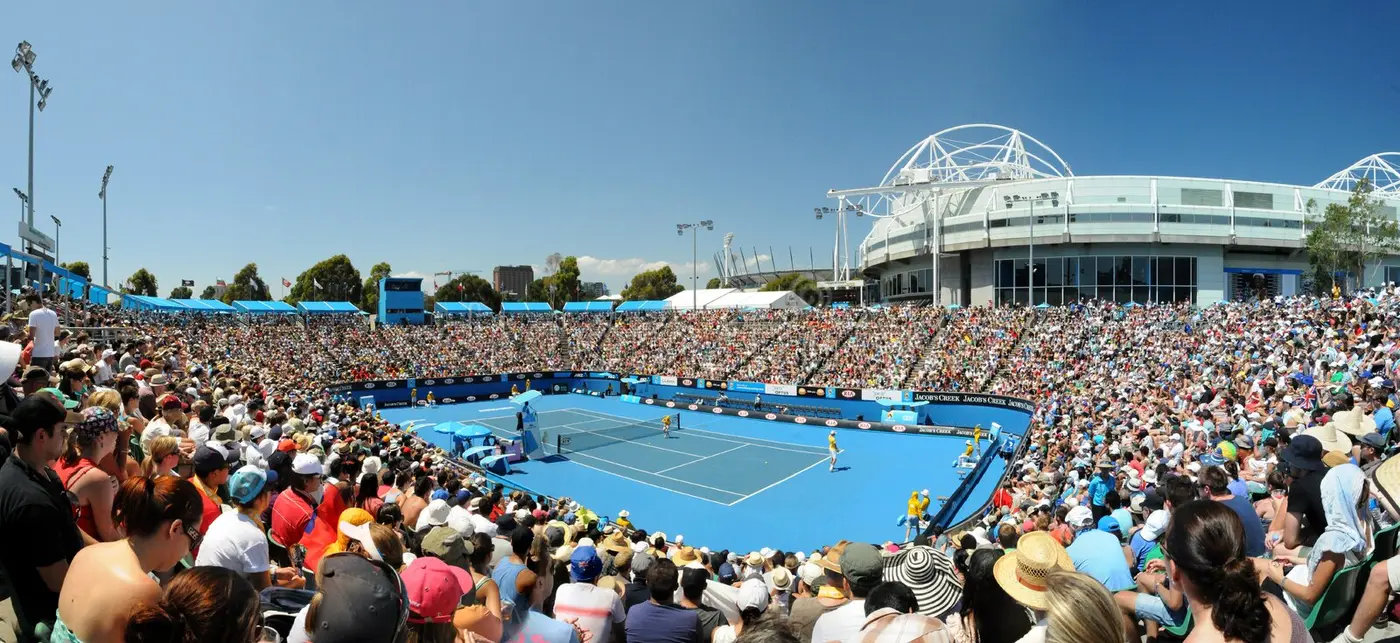
The Australian Open rarely lies. Over two weeks, patterns emerge, pressure exposes habits, and the margins between winning and losing become very clear. This year’s women’s draw offered a sharp reminder of what actually decides matches at the top level — and what still gets misunderstood.
This isn’t about vibes or momentum. It’s about composure, serve mechanics, tactical choices, and numbers that quietly predict outcomes long before the final handshake.
THE MENTAL EDGE: CONTROL BEATS COMBUSTION
One of the clearest contrasts at this Australian Open was emotional control. Elena Rybakina and Aryna Sabalenka arrive at points in very different ways.
Rybakina operates with near‑total emotional neutrality. Points end, good or bad, and she resets immediately. That calm doesn’t just look composed — it directly improves decision‑making under pressure.
Sabalenka plays closer to the edge. Her intensity can overwhelm opponents, but it also invites volatility. When timing slips or momentum turns, frustration creeps in and clarity goes with it.
The difference shows up late in sets. Players who remain emotionally flat are better at selecting high‑percentage patterns on break points, trusting first‑strike tennis without forcing it, and letting opponents miss rather than trying to finish everything themselves.
Mental strength in women’s tennis is rarely about motivation. It’s about containment.
THE SERVE STILL SETS THE FLOOR
Power tennis dominates conversations, but serve quality quietly defines match ceilings.
Rybakina and Sabalenka both benefit from height, but the real separator is toss control. When the toss drifts, serve speed drops, contact lowers, and returners step in immediately.
Across the tournament, serve success correlated most strongly with stable toss height, contact at full extension, and clear differentiation between first and second serves.
Second serves that kicked aggressively into the body consistently drew weaker returns than flat deliveries played “safe”.
The takeaway is simple: serve percentage matters less than serve authority. A reliable second serve that prevents attack is often more valuable than a low‑percentage first serve chased for aces.
VARIETY AS A PRESSURE TOOL
Baseline dominance remains the default mode in the women’s game, but the Australian Open reinforced the value of selective variety.
Sabalenka’s doubles background surfaced repeatedly. When rallies stagnated, she introduced short forehands to draw opponents forward, occasional net approaches to disrupt rhythm, and earlier directional changes.
These weren’t constant plays. They were timed interventions — moments designed to force uncertainty.
Players uncomfortable in the forecourt rarely lose points immediately, but they lose control of patterns. That loss compounds.
Variety works best when it’s used sparingly and decisively, not as a fallback.
RANKINGS: WHY JANUARY MATTERS
Ranking movement often confuses fans, but the Australian Open sits at the centre of the system.
Points operate on a 52‑week cycle. When last year’s Australian Open results fall off, players either replace them or drop sharply.
This is why one deep Grand Slam run can stabilise a season, failure to defend early‑year points creates pressure immediately, and players outside the top 100 face structural disadvantages in scheduling and entry.
Ranking isn’t a measure of talent. It’s a measure of recent execution.
WINNERS, ERRORS, AND WHAT DECIDES MATCHES
Few stats explain outcomes better than the winners‑to‑unforced‑errors ratio.
Positive ratios consistently aligned with match wins throughout the tournament. Negative ratios almost never did.
Unforced errors rise due to over‑pressing after missed chances, fatigue leading to late contact, or emotional frustration shortening rallies unnecessarily.
Aggression only works when it’s selective. Controlled risk produces winners. Emotional risk produces errors.
The most effective players accepted longer rallies until the right ball arrived — then finished decisively.
WHAT THIS TELLS US ABOUT THE WOMEN’S GAME
The Australian Open reinforced a quiet truth: women’s tennis is not becoming simpler. It’s becoming more precise.
Success now requires emotional containment under pressure, serve mechanics that hold up late in matches, tactical awareness beyond baseline exchanges, and an understanding of when to press and when to wait.
Power opens doors. Control decides outcomes.
FINAL THOUGHTS
Elite women’s tennis rewards clarity. Not volume, not emotion, not reputation — clarity.
The Australian Open showed that matches are won by players who manage their inner state, protect their serve, vary intelligently, and respect the maths of the sport.
That’s not romantic. It’s repeatable. And that’s why it works.

Katie grew up in Wimbledon Village and was introduced to the sport at an early age, attending The Championships long before digital ticketing and access systems became standard. That early exposure developed into a lifelong relationship with tennis, shaped both by playing club‑level tennis for many years and by experiencing the sport from the spectator side across all levels of competition.
While studying Economics, Katie worked in hospitality, an experience that sharpened her understanding of live events and audience experience — skills that later translated naturally into covering professional tennis as a committed and informed observer. Over time, she became a regular attendee at Wimbledon through club allocations, the public ballot, and the Queue, gaining a broad perspective on the tournament’s structure and culture.
Together with Dan, Katie has travelled extensively to national and international tournaments, with a particular focus on the early rounds and outside courts, where emerging talent is most visible. She has a long‑standing interest in player development and competitive dynamics, especially within the women’s game. Her role is ChalkdustMedia is as co host, production and blogging about the analysis of the Economics of the game.
Katie is a co‑founder of ChalkdustMedia, created to provide consistent, independent coverage of professional tennis with a dedicated focus on the WTA. Her work combines long‑term familiarity with the sport, on‑site experience, and an appreciation for the wider context that surrounds elite competition.
How tennis players adapt to clay courts during the European swing